Passive House certification requires continuous insulation, airtight construction, and minimal thermal bridging, especially at the foundation level. For builders and architects pursuing these rigorous standards, subslab insulation presents a critical challenge: how to achieve high R-values without thermal breaks while managing moisture and supporting structural loads. Foamed glass aggregate addresses this challenge by delivering insulation, drainage, and structural support in a single layer, making it an increasingly popular choice for Passive House projects across North America.
What is Foamed Glass Aggregate?
Foamed glass aggregate is a lightweight insulating aggregate made from 100% recycled glass. Glavel’s production process starts with milled glass powder that is blended with a foaming additive and heated to 1,600°F in an electrified kiln. As the glass melts and the foaming additive reacts, the mixture expands into a cellular structure, creating a network of closed-cell micropores. When cooled, the foam glass fractures naturally into gravel-sized pieces (1-3 inches). The result is a material that combines thermal insulation (R1.7 per inch), compressive strength (up to 125 psi), and free-draining properties, all while being made from 100% recycled content with renewable energy.
Passive House Design and Foamed Glass Aggregate
Passive House certification requires super-insulated building envelopes with minimal thermal bridging. While walls and roofs receive significant attention, the foundation is equally critical and often more challenging. Subslab insulation must provide continuous R-value, manage moisture, support structural loads, and avoid creating thermal bridges through the building envelope. Traditional assemblies often require multiple materials (rigid foam insulation + crushed stone), creating complexity and potential weak points. This is where foamed glass aggregate offers a compelling alternative.
Insulation and Thermal Performance
Foamed glass aggregate provides R1.7 per inch of insulation without thermal drift over building lifecycles. For a typical Passive House foundation requiring R20 to R30 subslab insulation, this translates to 12-18 inches of compacted foamed glass aggregate. Unlike rigid foam boards that create thermal bridges at seams, foamed glass aggregate provides continuous insulation across the entire foundation footprint. The closed-cell structure maintains consistent R-value even in damp conditions, which is critical for below-grade applications.
Moisture Management
Moisture management is critical in Passive House construction, where airtight envelopes can trap moisture if not properly designed. Foamed glass aggregate’s closed-cell structure means it doesn’t absorb water, maintaining its R-value and structural integrity even when saturated. Its free-draining nature also prevents water accumulation beneath slabs and supports passive radon mitigation strategies often required in Passive House projects. This permanent moisture resistance eliminates concerns about long-term degradation that can compromise building performance.
Sustainability
Passive House certification increasingly emphasizes embodied carbon alongside operational energy. Glavel’s foamed glass aggregate addresses both: it’s made from 100% post-consumer recycled glass and manufactured using renewable energy in Vermont, resulting in 55% lower embodied carbon compared to traditional foam insulation assemblies. Foamed glass aggregate carries an Environmental Product Declaration for transparent life cycle assessment reporting and a Declare Label verifying that is Red List Free.
This combination of operational energy performance and low embodied carbon aligns perfectly with Passive House’s evolution toward net zero and carbon-positive buildings, proving that the materials used to achieve energy efficiency can also minimize environmental impact.
Passive House Foundation Assembly with Foamed Glass Aggregate
A typical Passive House slab-on-grade assembly with foamed glass aggregate consists of the following layers from top to bottom:
- Concrete slab – Structural floor system
- Vapor barrier (15+ mil) – Moisture protection beneath slab
- Non-woven geotextile – Protection layer above foamed glass aggregate
- Compacted foamed glass aggregate (12-18 inches) – Providing R20 – R30 continuous insulation plus drainage
- Non-woven geotextile – Separation layer between subgrade and foamed glass aggregate
- Compacted subgrade – Stable, well-compacted soil base
This assembly eliminates the traditional layers of crushed stone for drainage and rigid foam boards for insulation, consolidating both functions into the foamed glass aggregate layer. The result is simpler construction, fewer materials to coordinate, and continuous thermal performance without interruption. For frost-protected shallow foundations, foamed glass aggregate can be used both beneath the slab and as insulated backfill around the perimeter, creating a continuous insulated envelope that protects against frost heaving while maintaining thermal performance.
Case Study: Passive House Performance in Practice
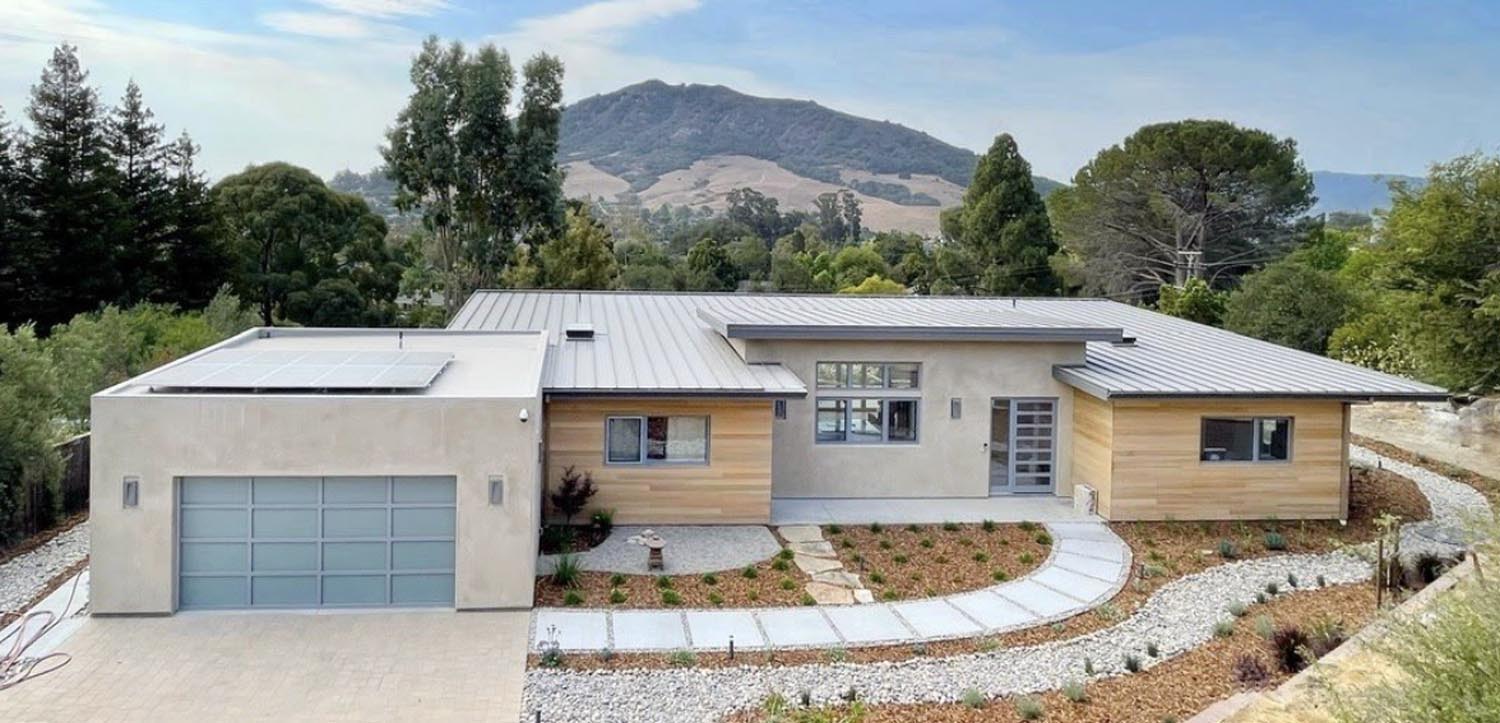
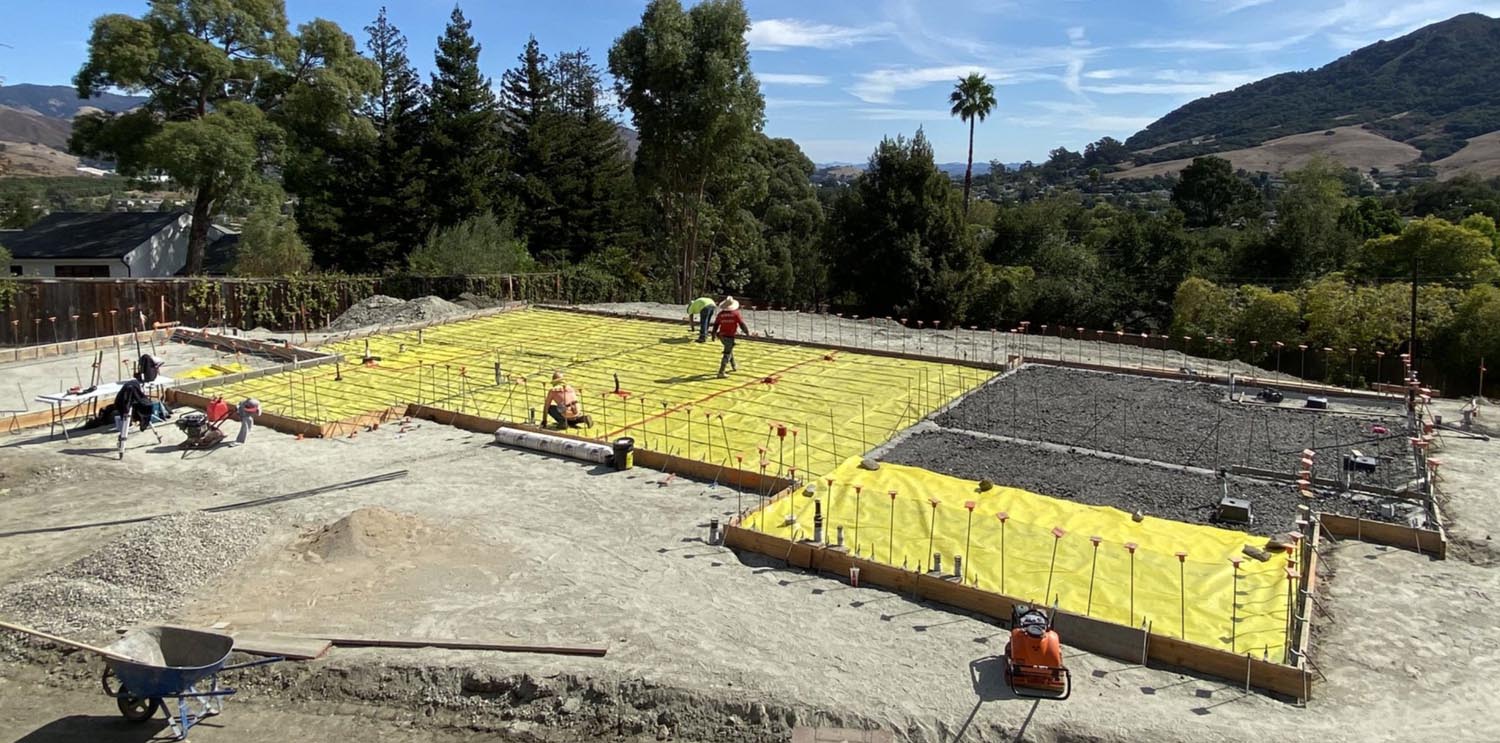
Bishop Passive House in San Luis Obispo, California demonstrates foamed glass aggregate’s effectiveness in Passive House applications. The project used 85 cubic yards of foamed glass aggregate at a 12 inch depth to achieve R20 continuous subslab insulation. The installation eliminated thermal bridging concerns associated with rigid foam board seams and provided integrated drainage beneath the slab. The project achieved Passive House certification while simplifying foundation construction and reducing embodied carbon.
Technical Specifications for Passive House Applications
Glavel’s Foamed Glass Aggregate Performance Data
| Property | Value | Relevance to Passive House |
| R-Value | 1.7 per inch | No thermal drift |
| Compressive Strength | 115-125 psi (post-compaction) | Supports slab loads |
| Moisture Absorption | None (closed-cell) | Maintains R-Value in damp conditions |
| Drainage | Free-draining | Prevents moisture accumulation |
| Embodied Carbon | 55% lower than foam assemblies | Supports carbon goals |
| Installation Depth | 12 – 18 inches | Achieves R20 – R30 |
| Particle Size | 1 – 3 inches | Natural gradation for compaction |
| Material Source | 100% recycled glass | Circular economy material |
Installation Considerations for Passive House Projects
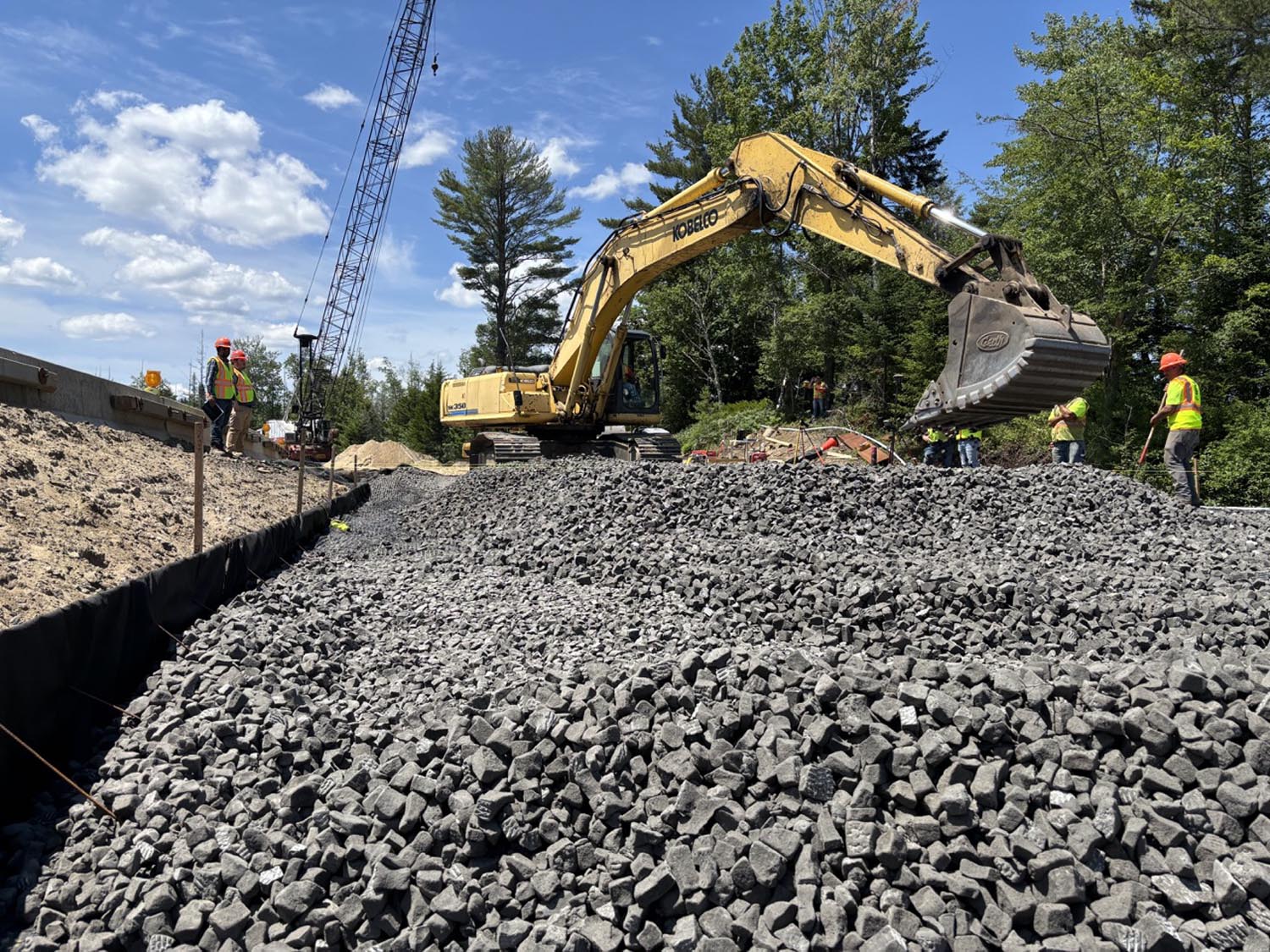
Foamed glass aggregate installs using standard construction equipment, making it accessible for builders familiar with conventional aggregate placement. The material is delivered in 3 cubic yard bulk bags and compacted using lightweight vibratory plate compactors. For Passive House projects, proper compaction is essential to achieve both the specified R-value and load-bearing capacity. 4-5 complete passes with a lightweight vibratory compactor (<200 lbs) is recommended to achieve the necessary 25% compaction. Installation coordination is simplified compared to traditional assemblies because there are no rigid foam boards to cut, fit, or tape. The material flows around utilities, radon piping, and other penetrations, maintaining continuous insulation without the gaps that can occur with rigid boards. This reduces installation time and eliminates the coordination challenges of managing multiple material layers.
Conclusion
Foamed glass aggregate delivers the continuous insulation, moisture management, and low embodied carbon that Passive House foundations need, all in a single material that simplifies construction and ensures permanent performance. As more builders and architects pursue Passive House certification, foamed glass aggregate offers a proven solution for the challenging foundation layer where thermal performance, moisture control, and long-term durability matter most.
By eliminating thermal bridges, managing moisture effectively, and dramatically reducing embodied carbon, foamed glass aggregate supports both the energy performance and sustainability goals that define Passive House construction. It proves that the most demanding building standards can be met with materials that are both high-performing and environmentally responsible.