Exit 17 Bridge Replacement

Project Overview

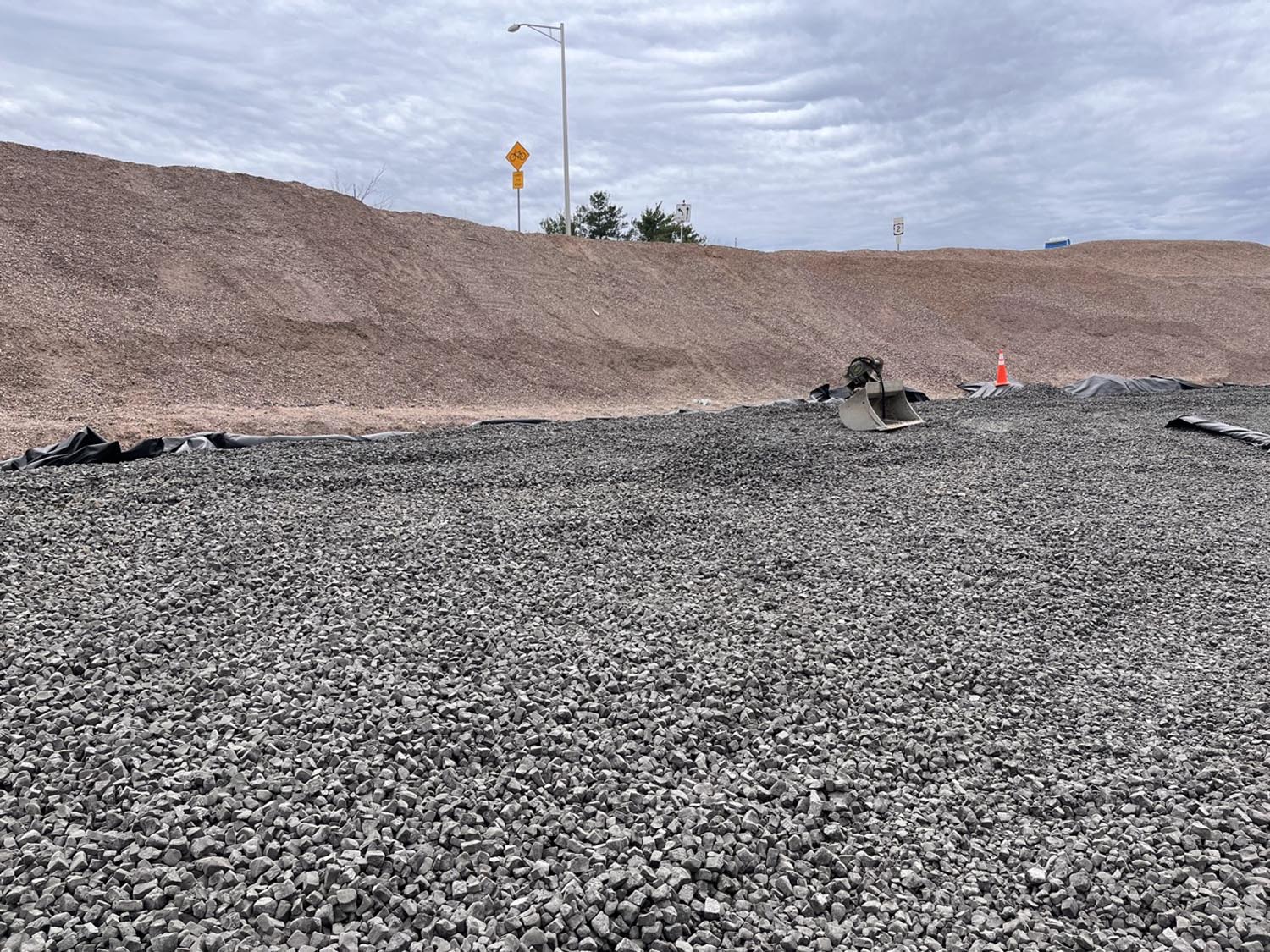
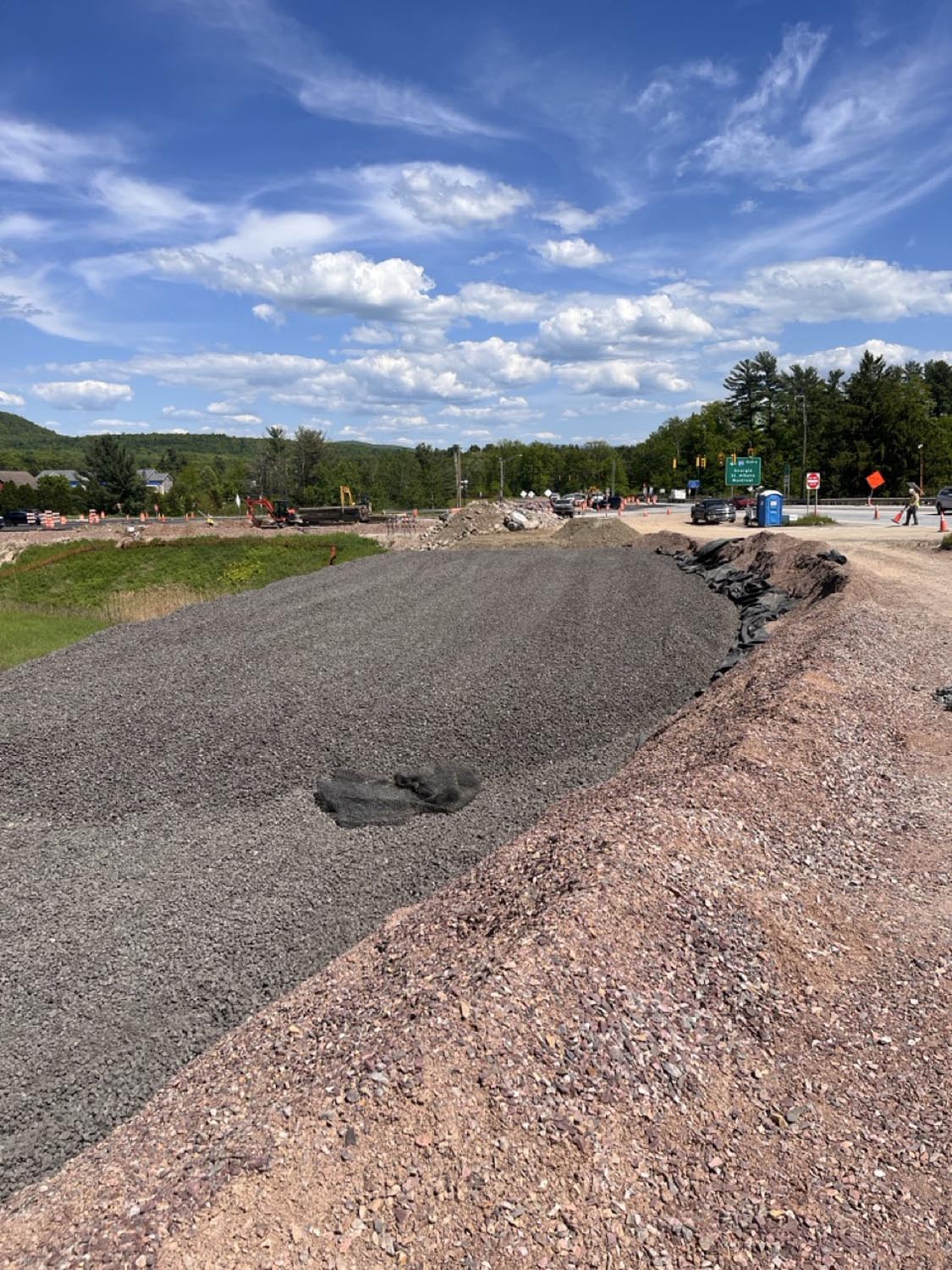
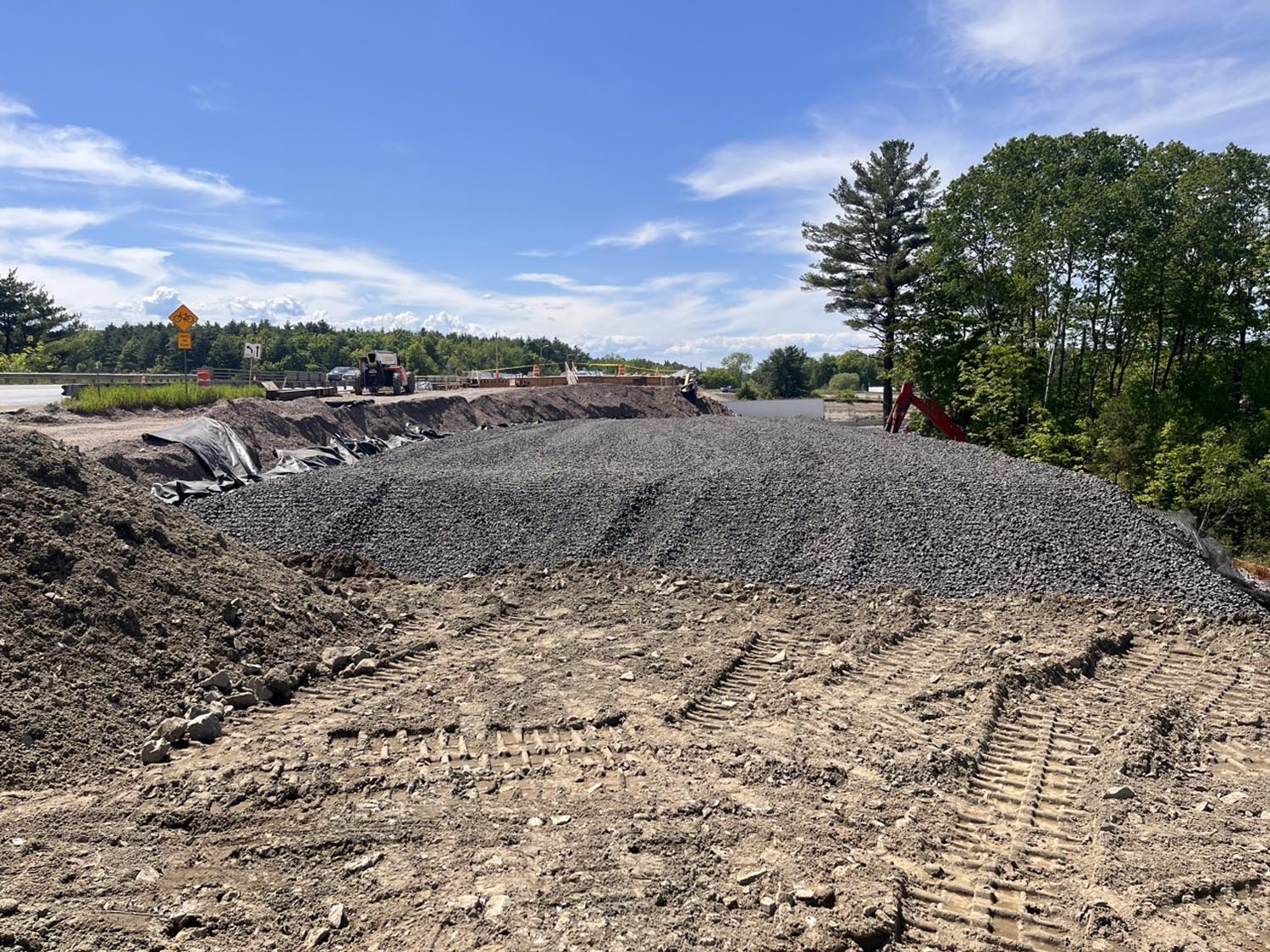
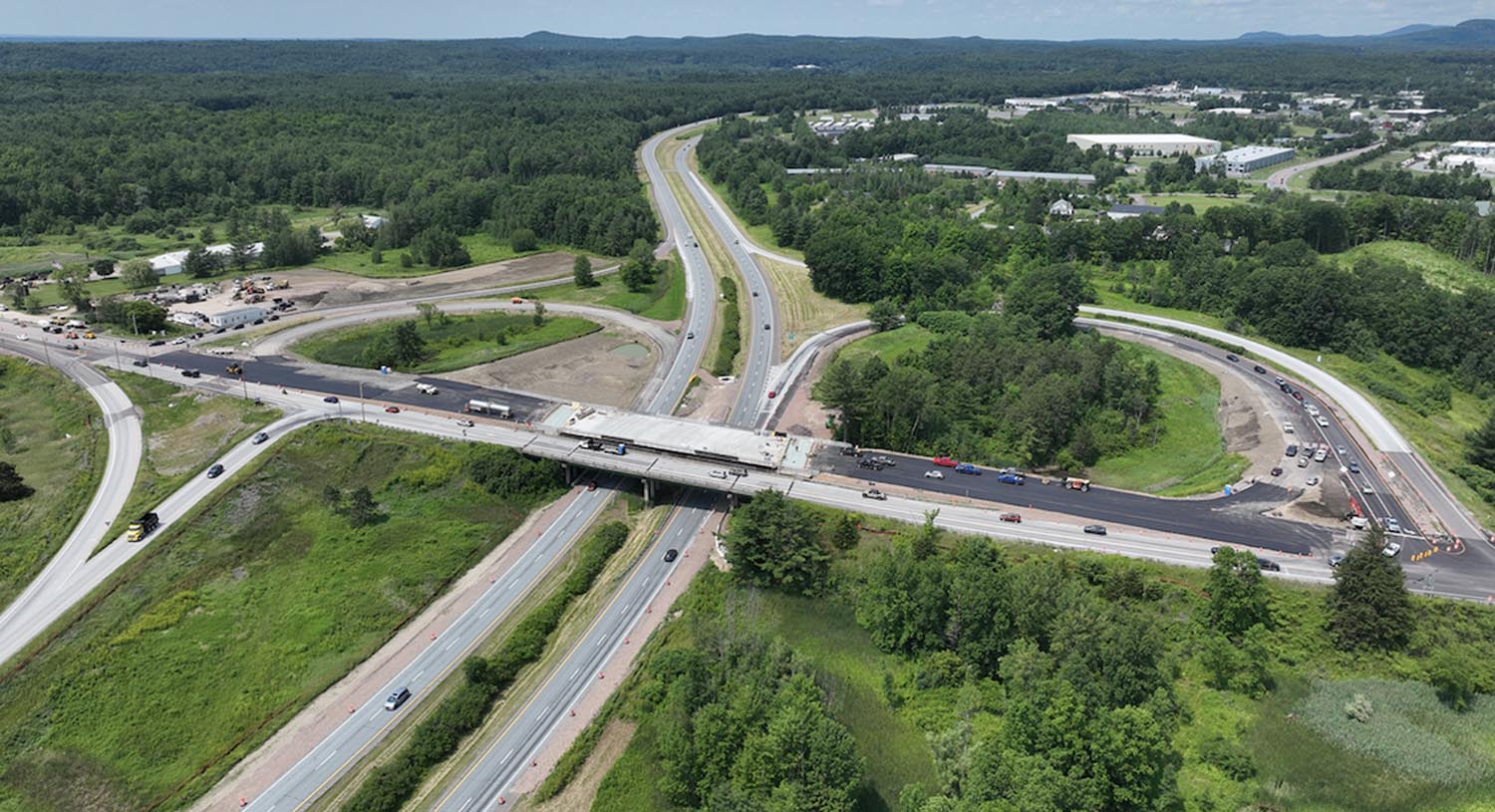
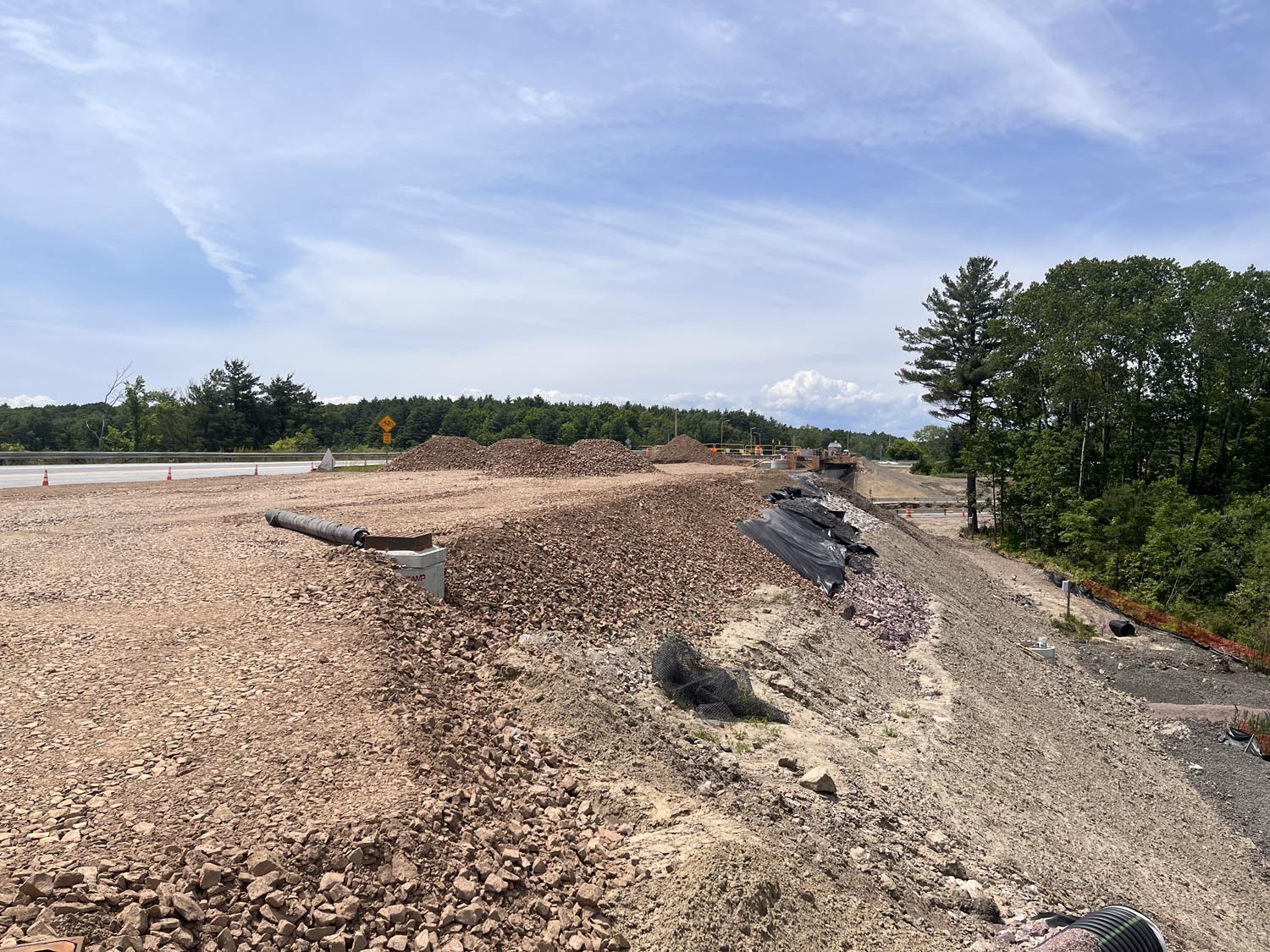
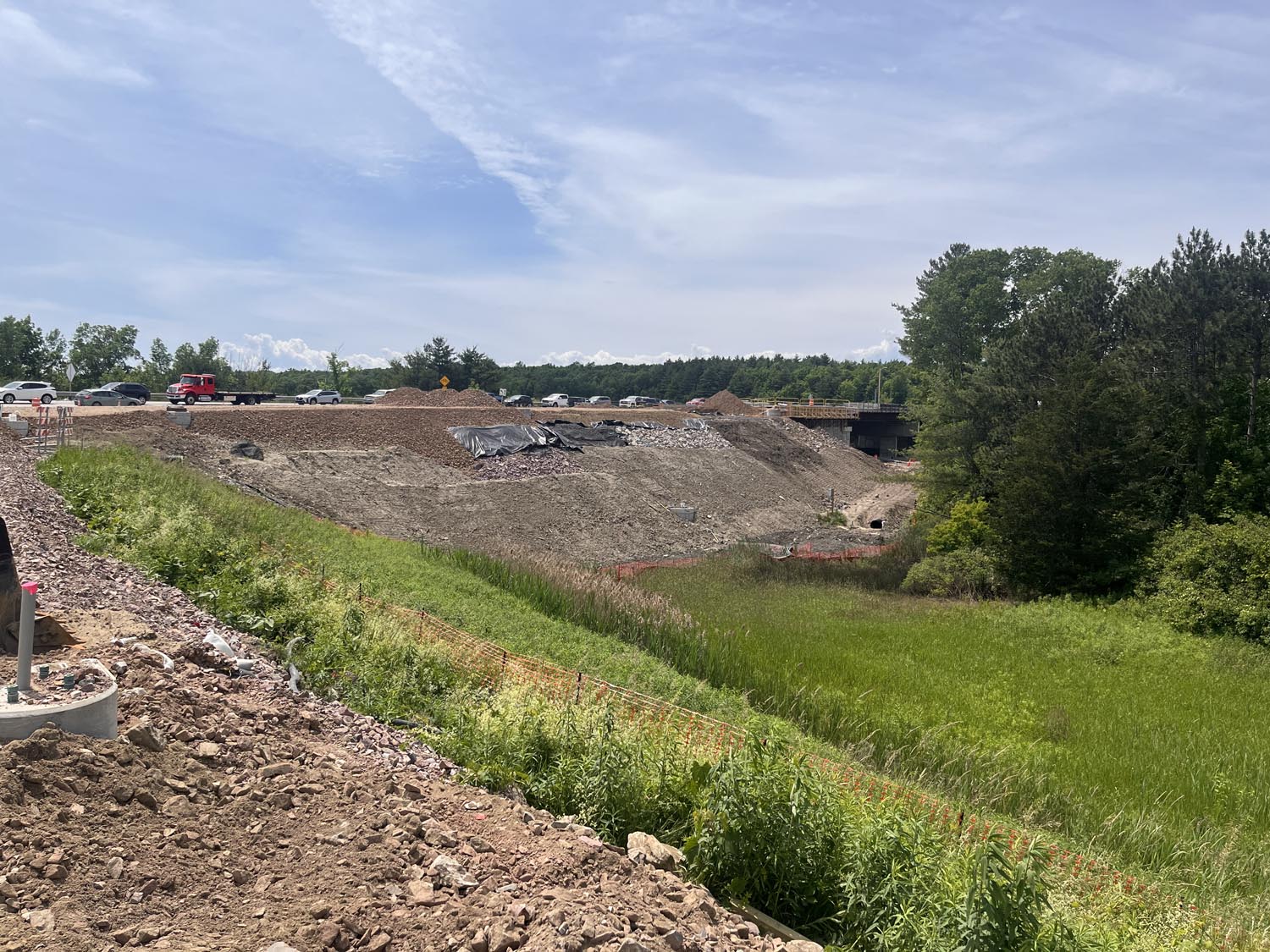
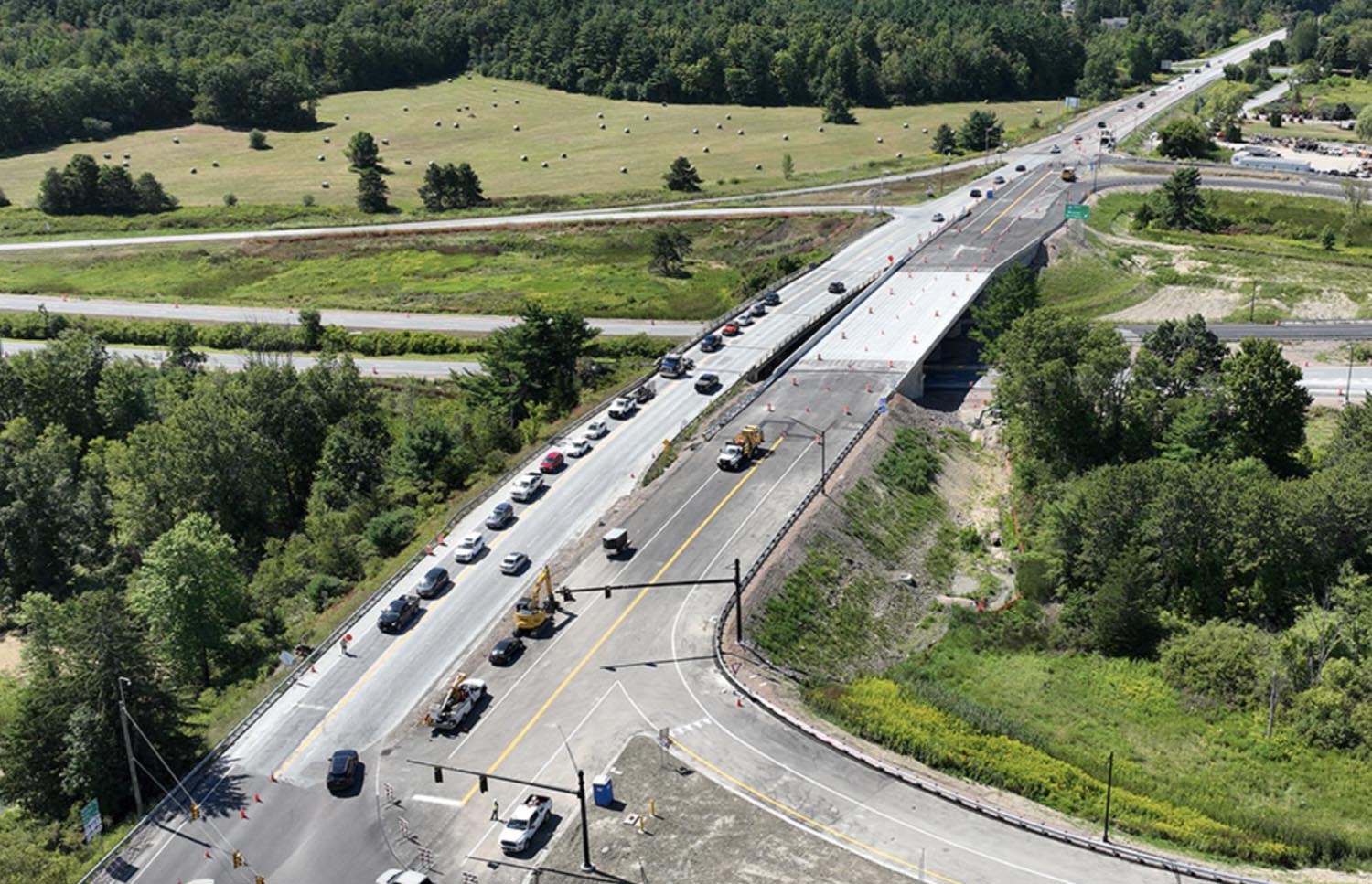
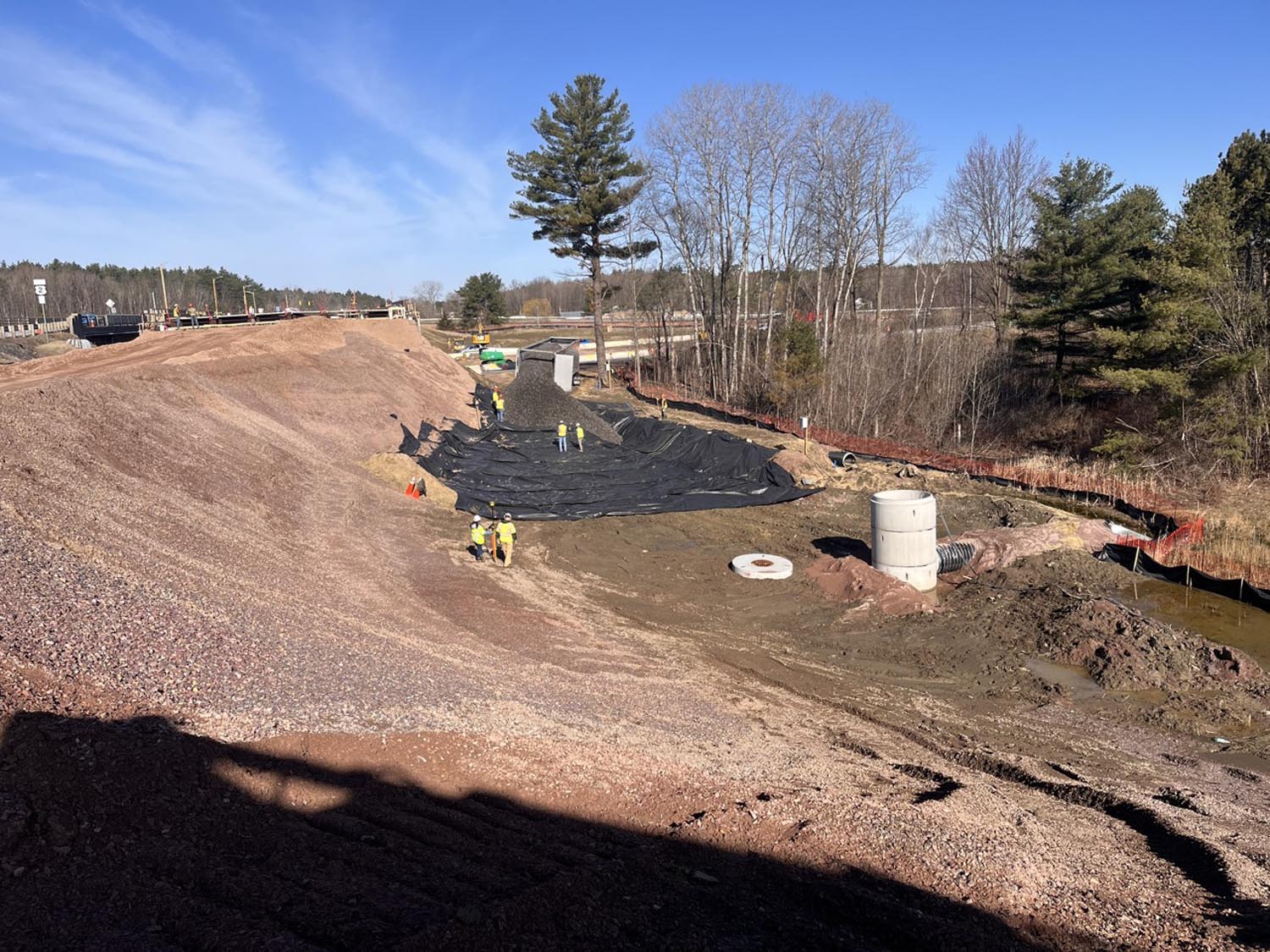
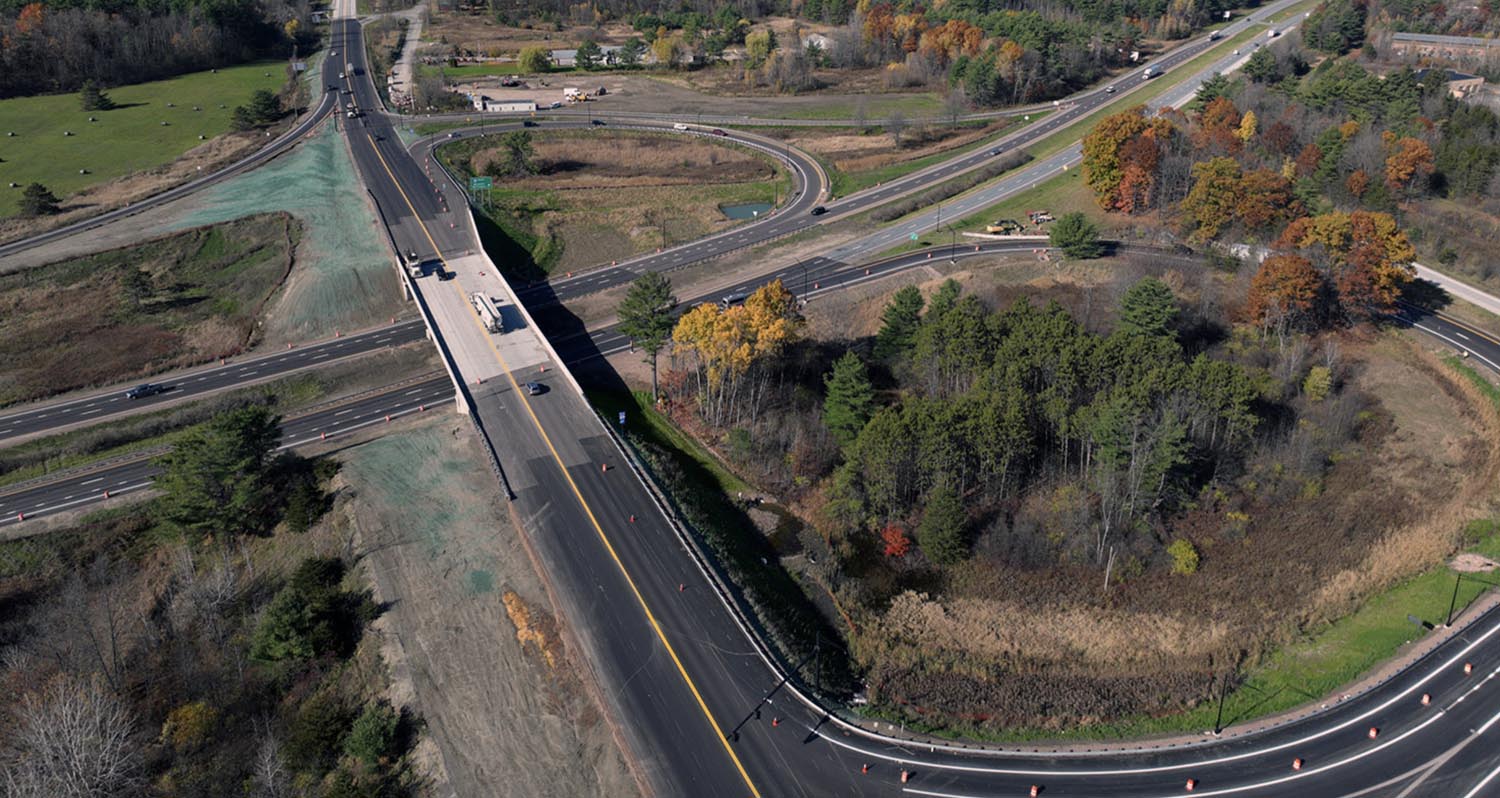
The Exit 17 Bridge over Vermont’s I-89 in Colchester, Vermont is an integral part of the Route 2 corridor, connecting Grand Isle County and parts of Colchester to Vermont’s interstate system. Deteriorating bridge conditions from a 1960’s-era design prompted a complete replacement and interchange traffic pattern reorganization. Foamed glass aggregate delivered the lightweight fill needed to build the bridge approach and mechanically stabilized earth walls without costly excavation or long-term settlement risks.
Design Challenges

Many of I-89’s Vermont bridges from the 1960s were designed with 60 foot spans and center piers. While effective at the time, this design exposed expansion joints to decades of road salt and harsh winter conditions. The Exit 17 bridge was strained by structural deterioration and increasing Route 2 traffic, which made a complete bridge replacement urgent.

Adding to the complexity, much of Chittenden County sits on glacial till soils underlain by deep, soft clay layers left over from the prehistoric Champlain Sea. Traditional repair methods presented serious challenges:

  • Conventional soil with piles risked long-term settlement and lateral bulging, undermining stability.
  • Sheet-pile excavations could have removed the clay, but the close proximity to an interstate corridor would have been costly, disruptive, and created worker safety concerns.

These conditions created a critical need for an innovative approach that would balance geotechnical performance, construction feasibility, and long-term durability.

Glavel as a Solution

Faced with challenging clay soils at the bridge site, Vermont Agency of Transportation engineers turned to foamed glass aggregate as an alternative to traditional fill or sheet-pile excavation. Foamed glass aggregate minimized settlement risks without the need for extensive excavation or costly reinforcement.

To validate performance, the project team used inclinometers and piezometers to measure ground movement and
water pressure. The data confirmed that foamed glass aggregate delivered the necessary stability needed under difficult subsurface conditions.

Construction & Installation
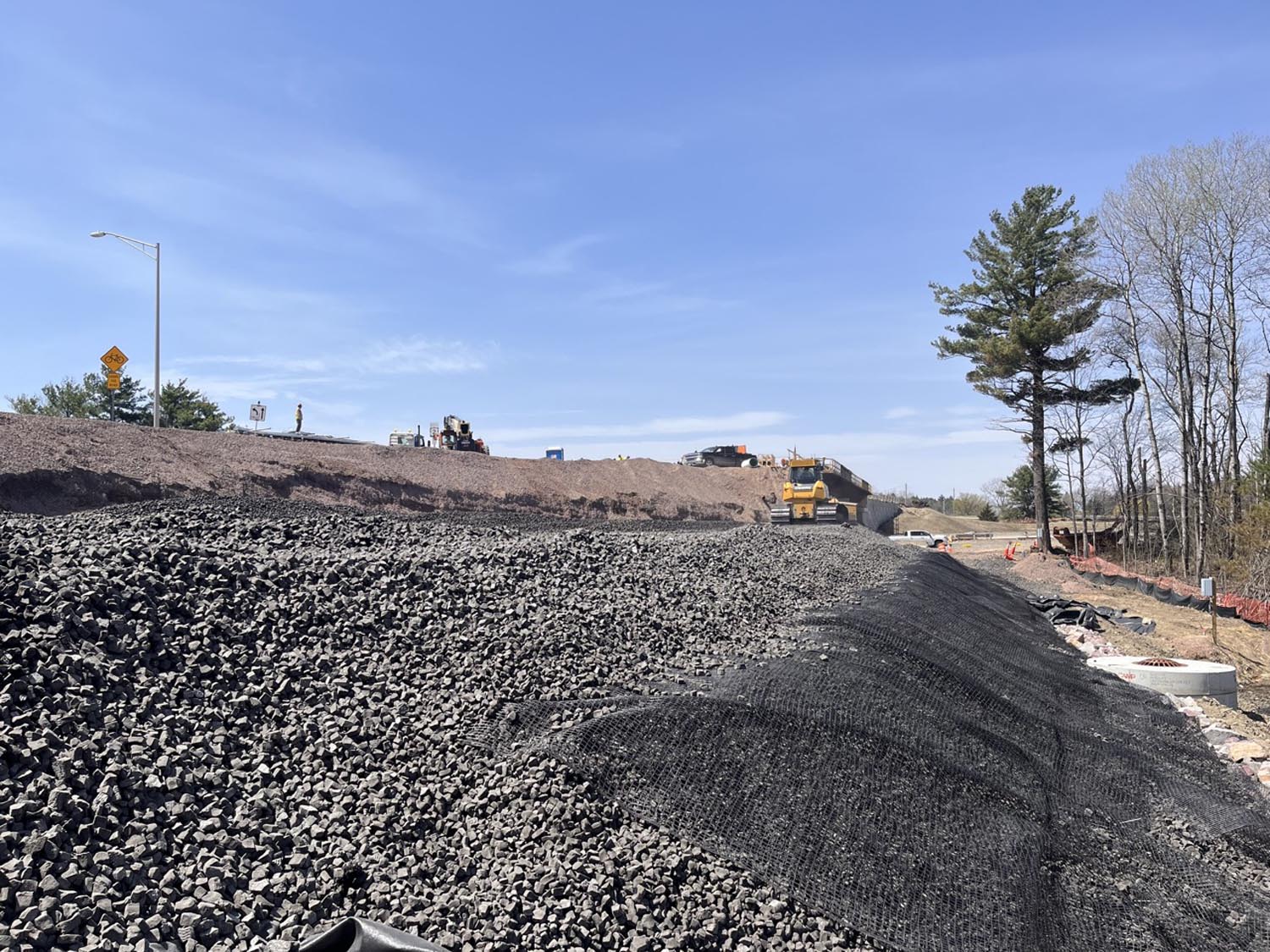
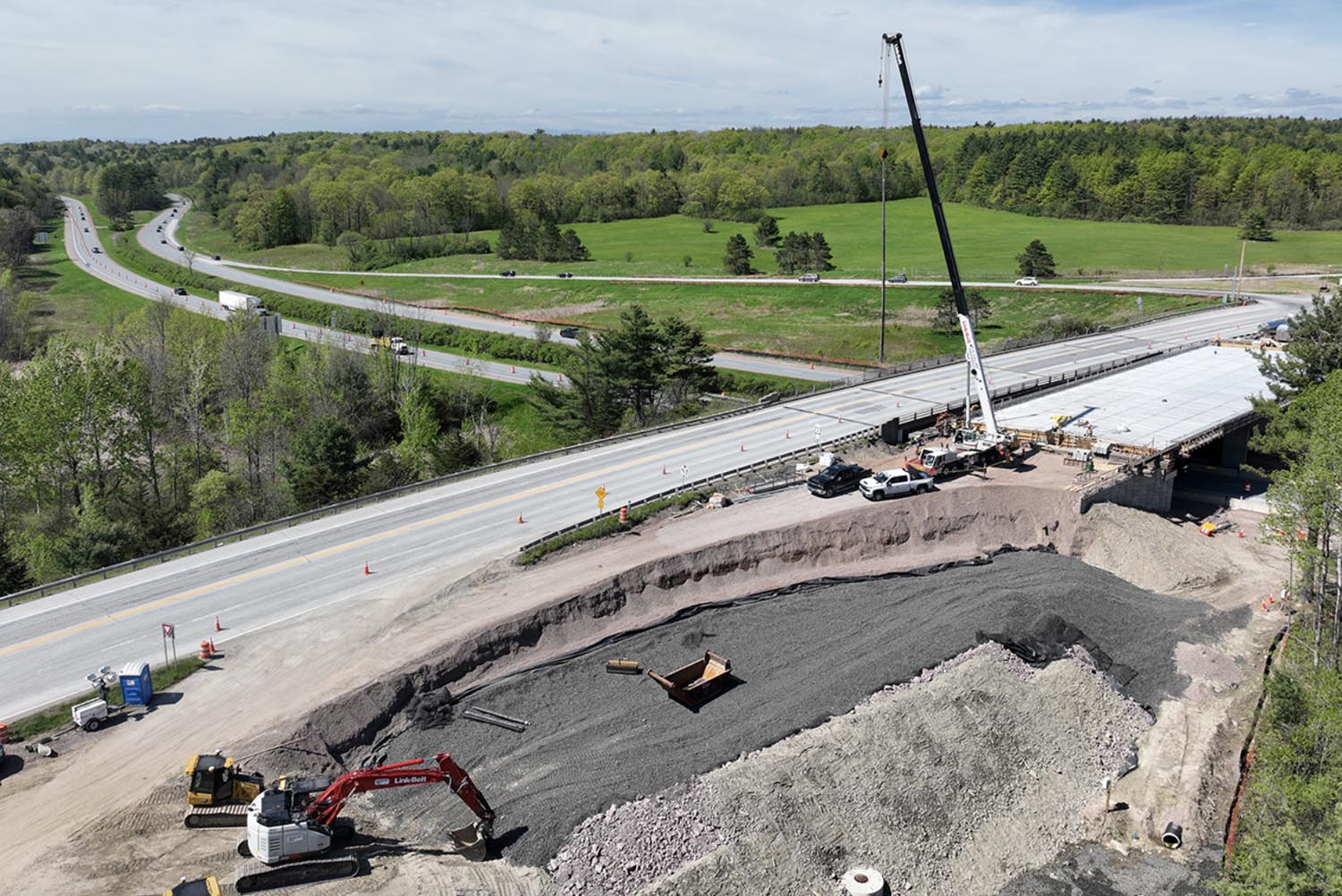
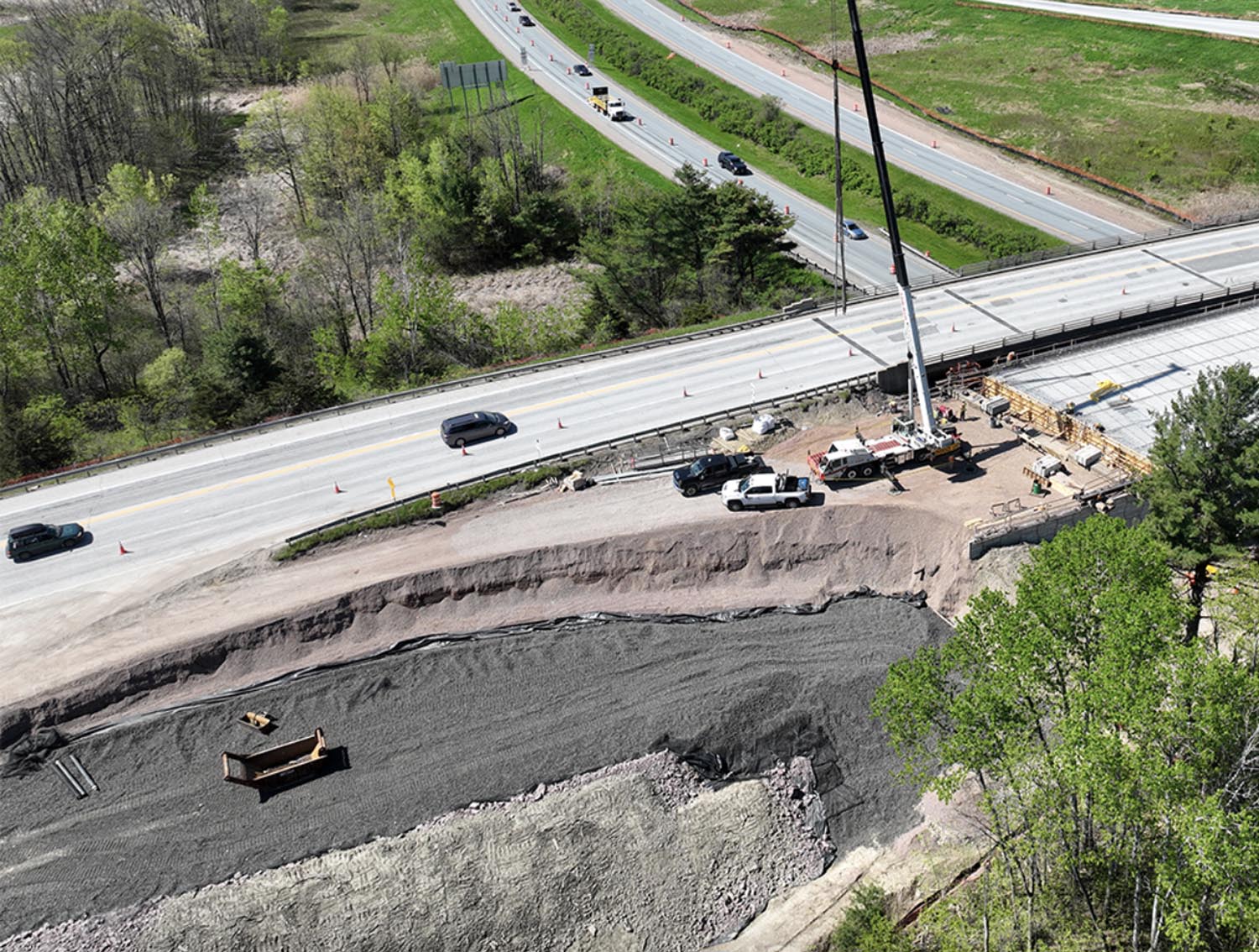
The bridge design combined mechanically stabilized earth walls to support the roadway with H-piles carrying the bridge itself. On site, foamed glass aggregate proved both practical and efficient:

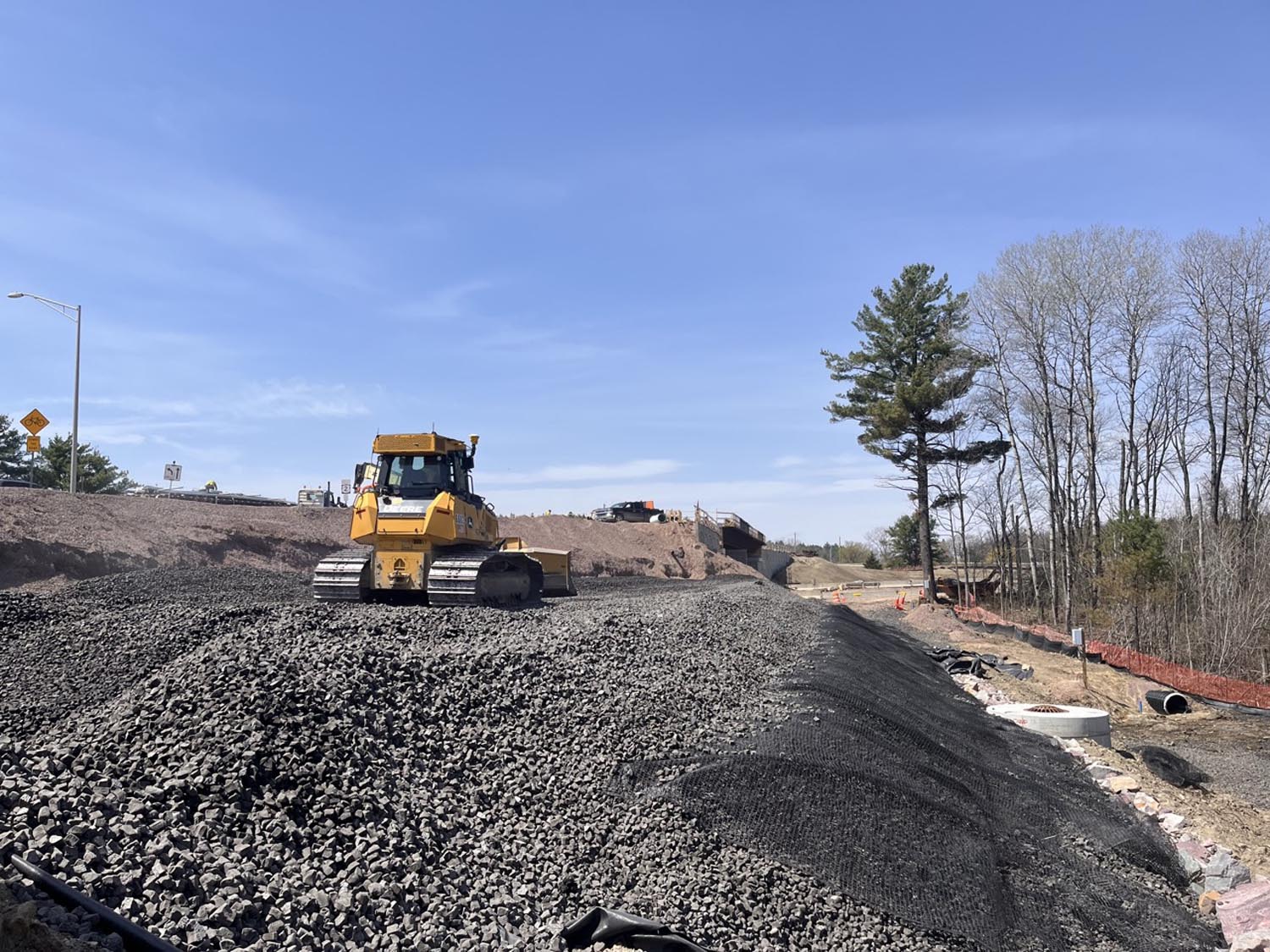
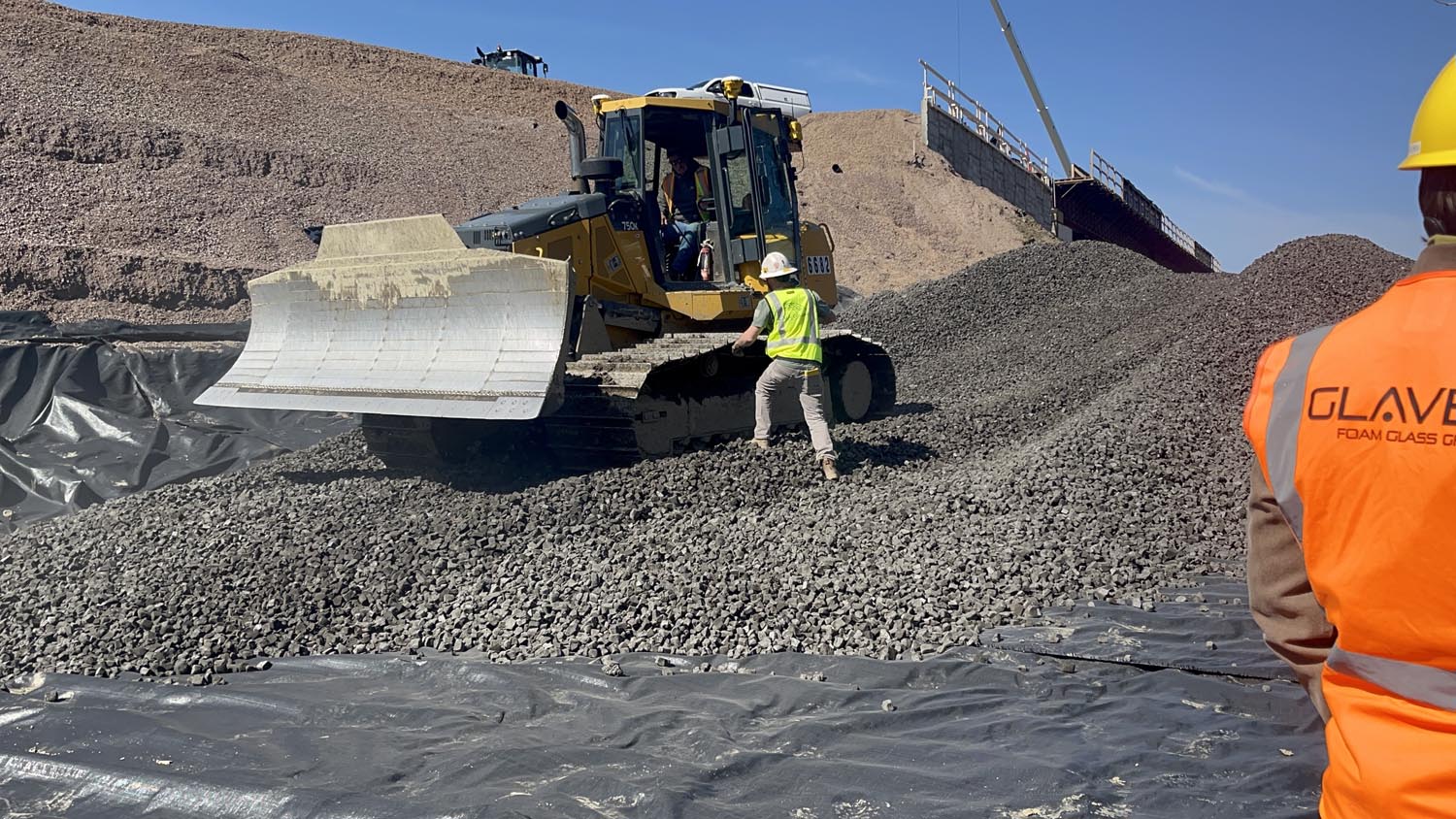
  • Simplified installation: Equipment could operate safely at the edge of placement zones with minimal risk.
  • Controlled lifts: Each lift was contained with geogrid with careful oversight on compaction and lift height.
  • Equipment flexibility: Excavators with low-pressure tracks easily handled the material, with only minor adjustments between edge and center compaction.


Results & Benefits
The Exit 17 project was completed on schedule, with a structure designed for a 125 year service life. By using foamed glass aggregate, Vermont Agency of Transportation:
  • Eliminated the time and expense of sheet-pile excavation.
  • Reduced construction risk in difficult soil conditions.
  • Delivered a durable, long-term solution for Vermont’s transportation infrastructure.
Project Name
Exit 17 Bridge Replacement
Location
Colchester, Vermont
Application
Scope Completion Date
June 2025
Volume
12,500 cubic yards
Carbon Savings

Case Studies

Foamed Glass Aggregate being used at the Exit 17 Bridge Replacement
Infrastructure Construction
, Lightweight Fill
Exit 17 Bridge Replacement
Vermont’s Exit 17 Bridge replacement used 12,500 cubic yards of foamed glass aggregate to build bridge approaches over deep clay soils, eliminating the need for costly excavation while preventing long-term settlement in the I-89 corridor.
Featured photo for the OnLogic Case Study
Commercial Construction
, Subslab Insulation
OnLogic
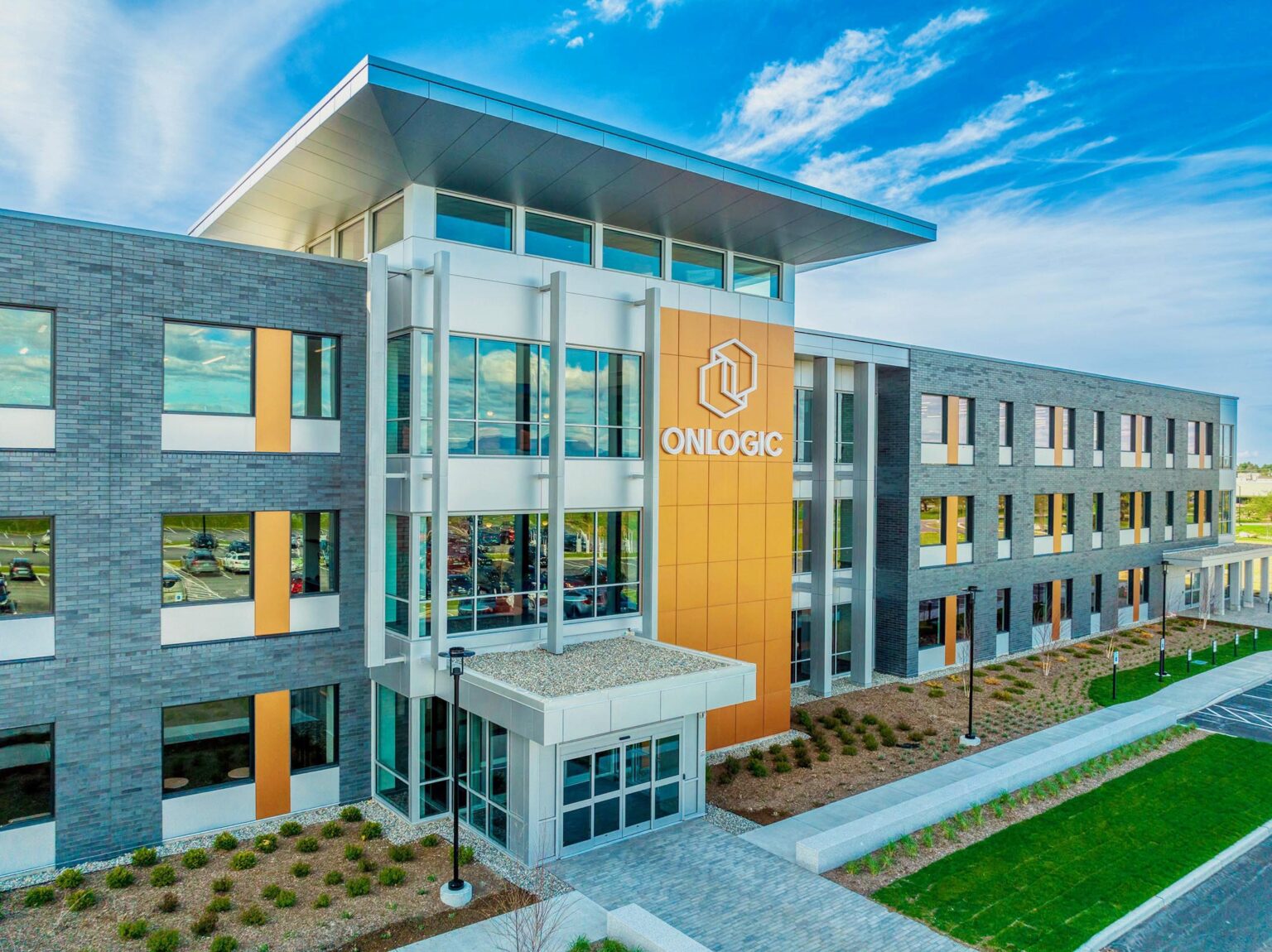
OnLogic’s 150,000 sq ft headquarters achieved 87% embodied carbon reduction by replacing traditional foam insulation with foamed glass aggregate in their subslab assembly.
Foamed Glass Aggregate being used at the Route 28 Bridge Replacement
Infrastructure Construction
, Lightweight Fill
Route 28 Bridge Replacement
A historic bridge through the Adirondack Park near Raquette Lake needed a 12 foot grade change over a sensitive marshland. Foamed glass aggregate delivered a lightweight solution that protected the nearby landscape and eliminated the need for driving piles.
Commercial Construction
OnLogic
OnLogic’s 150,000 sq ft headquarters achieved 87% embodied carbon reduction by replacing traditional foam insulation with foamed glass aggregate in their subslab assembly.

Let’s Build Together.

Explore how foamed glass aggregate can work for you.