Bishop Passive House

Project Overview

The Bishop Passive House in San Luis Obispo, California required continuous insulation to achieve Passive House certification and the targeted 85% reduction in energy use compared to traditional new construction. Traditional foam insulation could have provided the necessary insulation, but didn’t meet the project’s sustainability goals. The design team needed subslab insulation that satisfied Passive House Planning Package requirements, provided building comfort and efficiency, and kept the project under budget.
Design Challenges

Achieving Passive House Institute certification requires meeting rigorous thermal performance standards that eliminate energy waste throughout the building envelope. The Cairn Collaborative team faced the following challenges when procuring materials for the build:

  • Thermal bridging elimination: Passive House Planning Package modeling requires continuous insulation beneath the slab to prevent heat loss through the foundation.
  • Climate-specific comfort: San Luis Obispo’s cool evenings create cold floor temperatures in homes without subslab insulation, which compromises energy efficiency and comfort.
  • Material sustainability: Traditional rigid foam board conflicted with the project’s environmental values, requiring an alternative that delivered thermal performance without relying on petrochemical-based products.

Glavel as a Solution

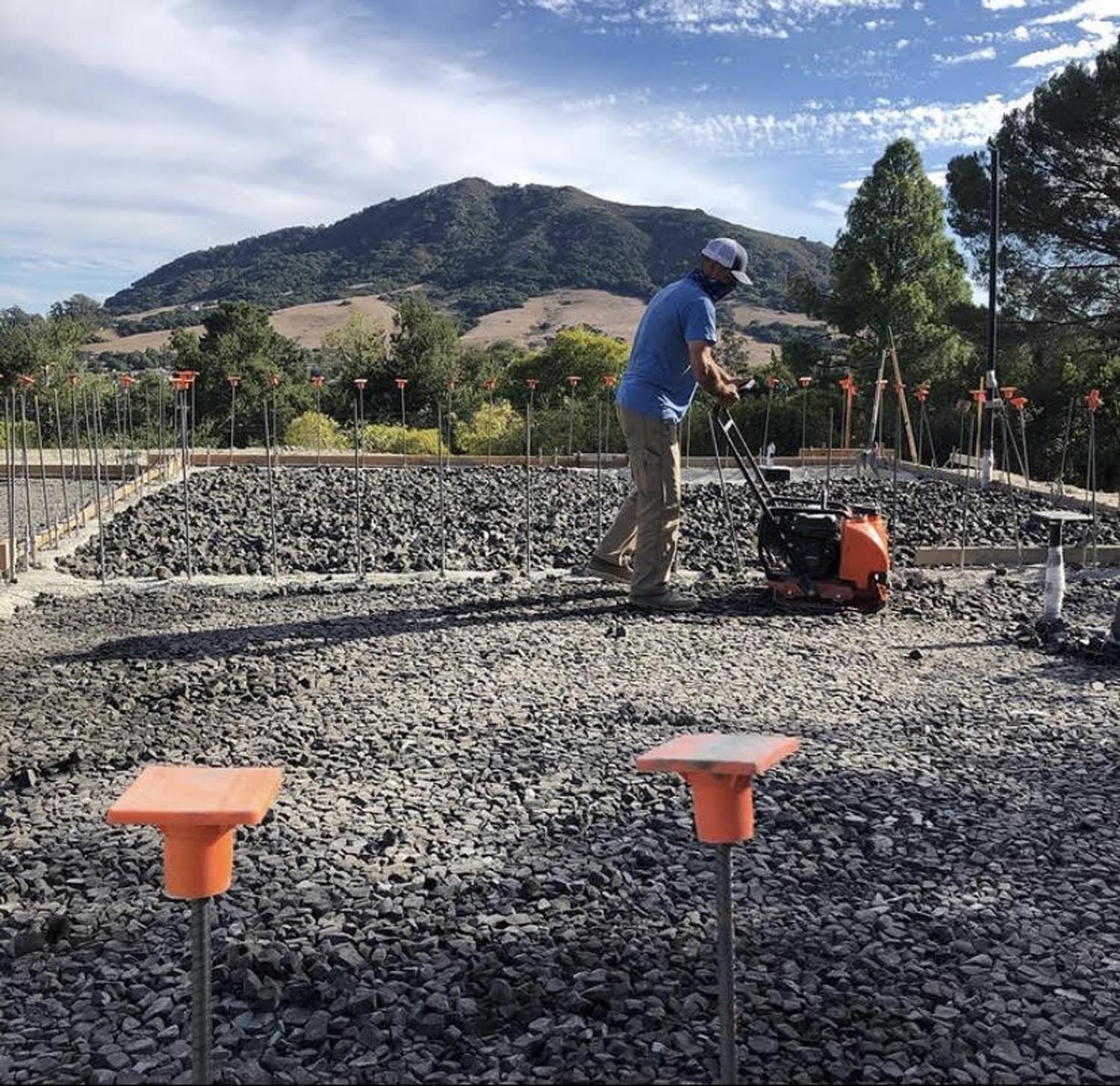
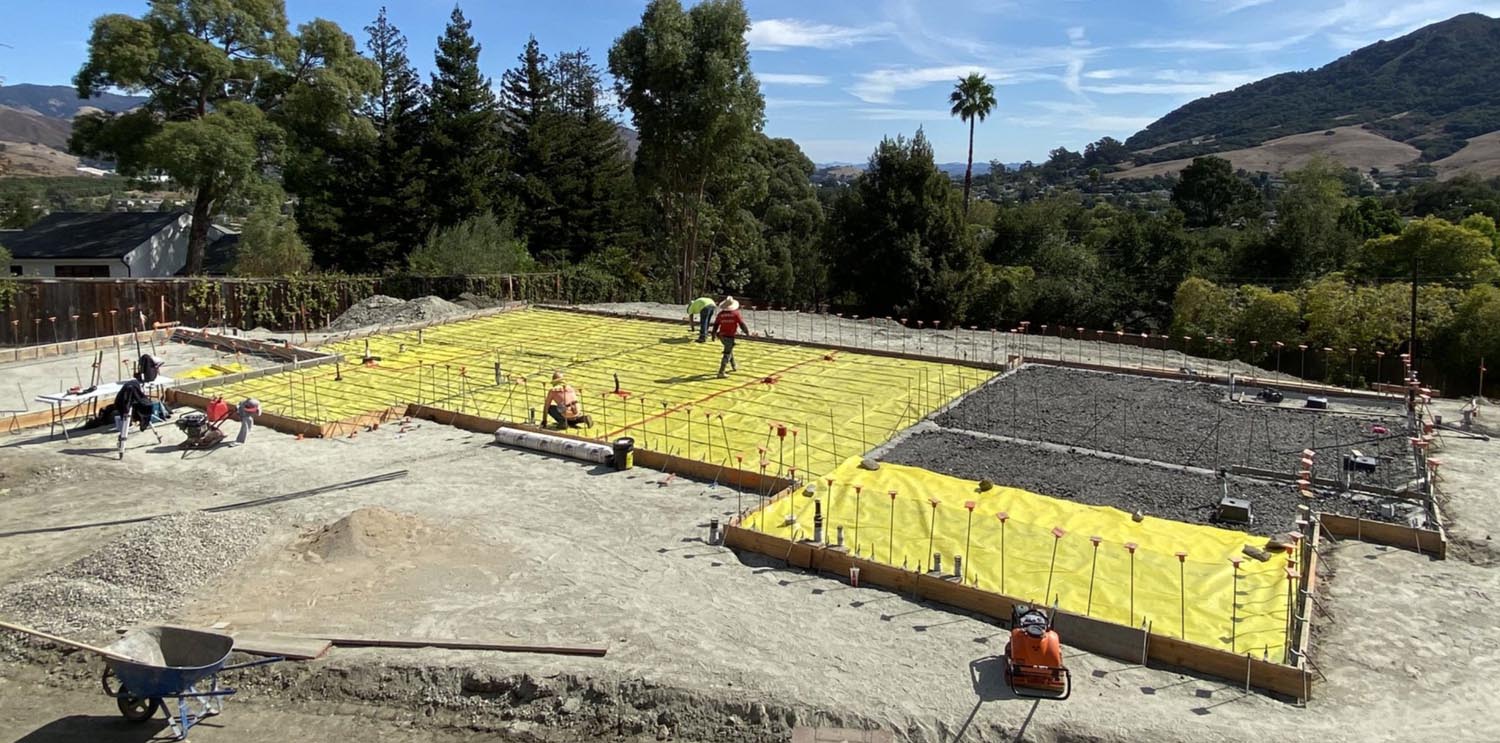
Foamed glass aggregate was the ideal material to meet the project’s diverse environmental and performance needs. Because foamed glass aggregate is made from post-consumer recycled glass, it aligns with sustainability goals and environmental requirements for the project. The closed-cell structure of foamed glass aggregate created an effective thermal barrier against the ground and concrete slab, preventing heat loss. The two person installation team spread and compacted the entire slab area in a single day with standard equipment, while the concrete team adjusted to a new material without issues. Foamed glass aggregate provided the needed continuous insulation while supporting the home’s airtight construction strategy without compromising the build’s efficiency.

Project Name
Bishop Passive House
Location
San Luis Obispo, California
Application
Scope Completion Date
July 2021
Volume
85 cubic yards
Carbon Savings

Case Studies

Foamed Glass Aggregate being used at the Exit 17 Bridge Replacement
Infrastructure Construction
, Lightweight Fill
Exit 17 Bridge Replacement
Vermont’s Exit 17 Bridge replacement used 12,500 cubic yards of foamed glass aggregate to build bridge approaches over deep clay soils, eliminating the need for costly excavation while preventing long-term settlement in the I-89 corridor.
Featured photo for the OnLogic Case Study
Commercial Construction
, Subslab Insulation
OnLogic
OnLogic’s 150,000 sq ft headquarters achieved 87% embodied carbon reduction by replacing traditional foam insulation with foamed glass aggregate in their subslab assembly.
Foamed Glass Aggregate being used at the Route 28 Bridge Replacement
Infrastructure Construction
, Lightweight Fill
Route 28 Bridge Replacement
A historic bridge through the Adirondack Park near Raquette Lake needed a 12 foot grade change over a sensitive marshland. Foamed glass aggregate delivered a lightweight solution that protected the nearby landscape and eliminated the need for driving piles.
Commercial Construction
OnLogic
OnLogic’s 150,000 sq ft headquarters achieved 87% embodied carbon reduction by replacing traditional foam insulation with foamed glass aggregate in their subslab assembly.

Let’s Build Together.

Explore how foamed glass aggregate can work for you.