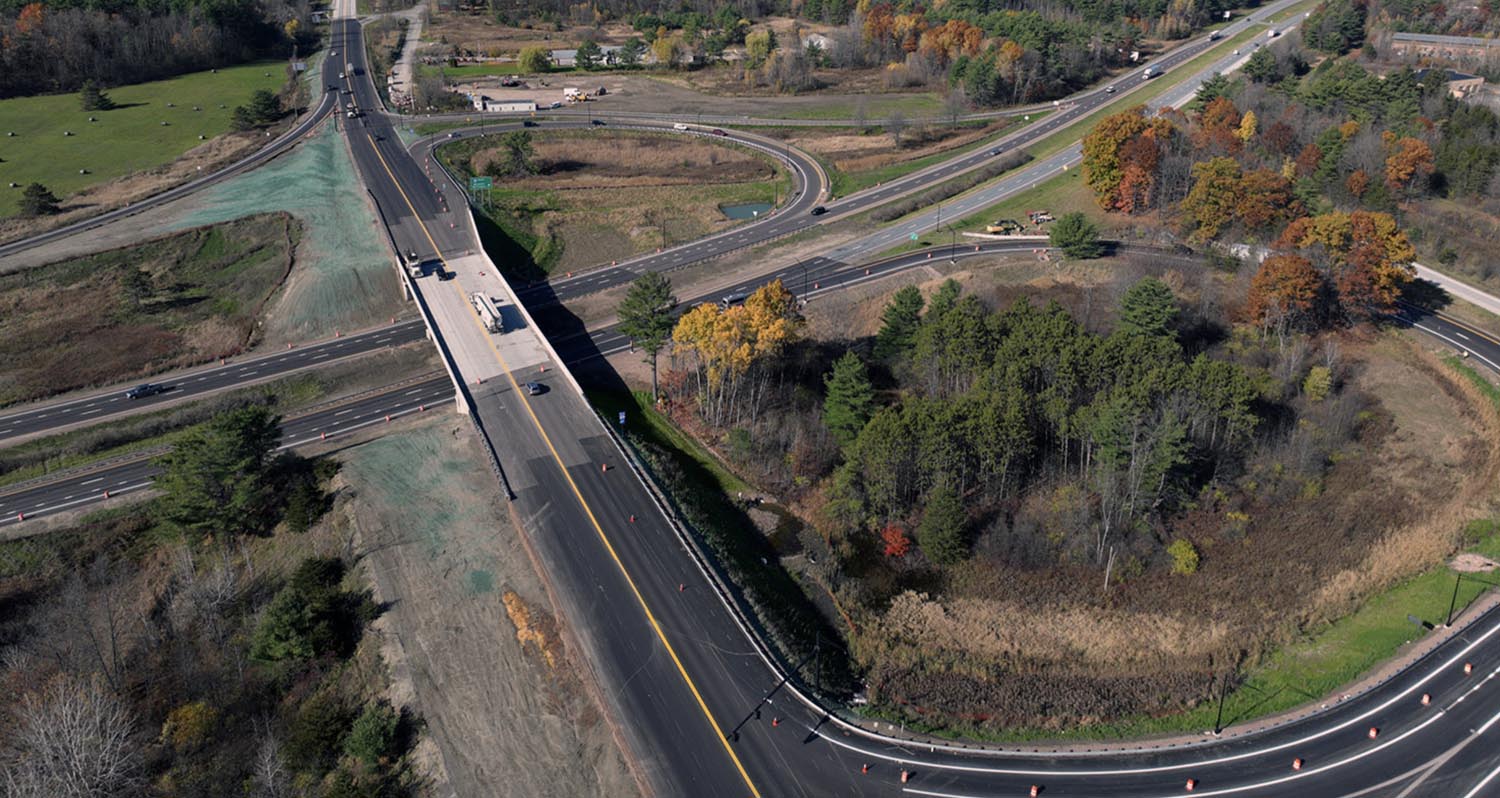
Aging infrastructure and compressible marine clay soils beneath I-295 outside of Portland, Maine required a lightweight fill solution that reduced settlement while also maintaining the compressive strength needed to support roadway traffic loads.
Design Challenges
Bucknam Bridge faced geotechnical challenges that complicated an otherwise straightforward infrastructure replacement. The aging bridge’s structure required a complete reconstruction, but the site’s geotechnical conditions created the following challenges:
Compressible foundation soils: Soft marine clay soil along coastal Maine are prone to settling under load.
Loading requirements: The bridge abutments needed to support the bridge’s dead load and roadway traffic.
Settlement risk: Traditional granular fill would add excessive weight to the clay foundation, risking long-term settlement that could compromise the bridge’s structural integrity and longevity.
Glavel as a Solution
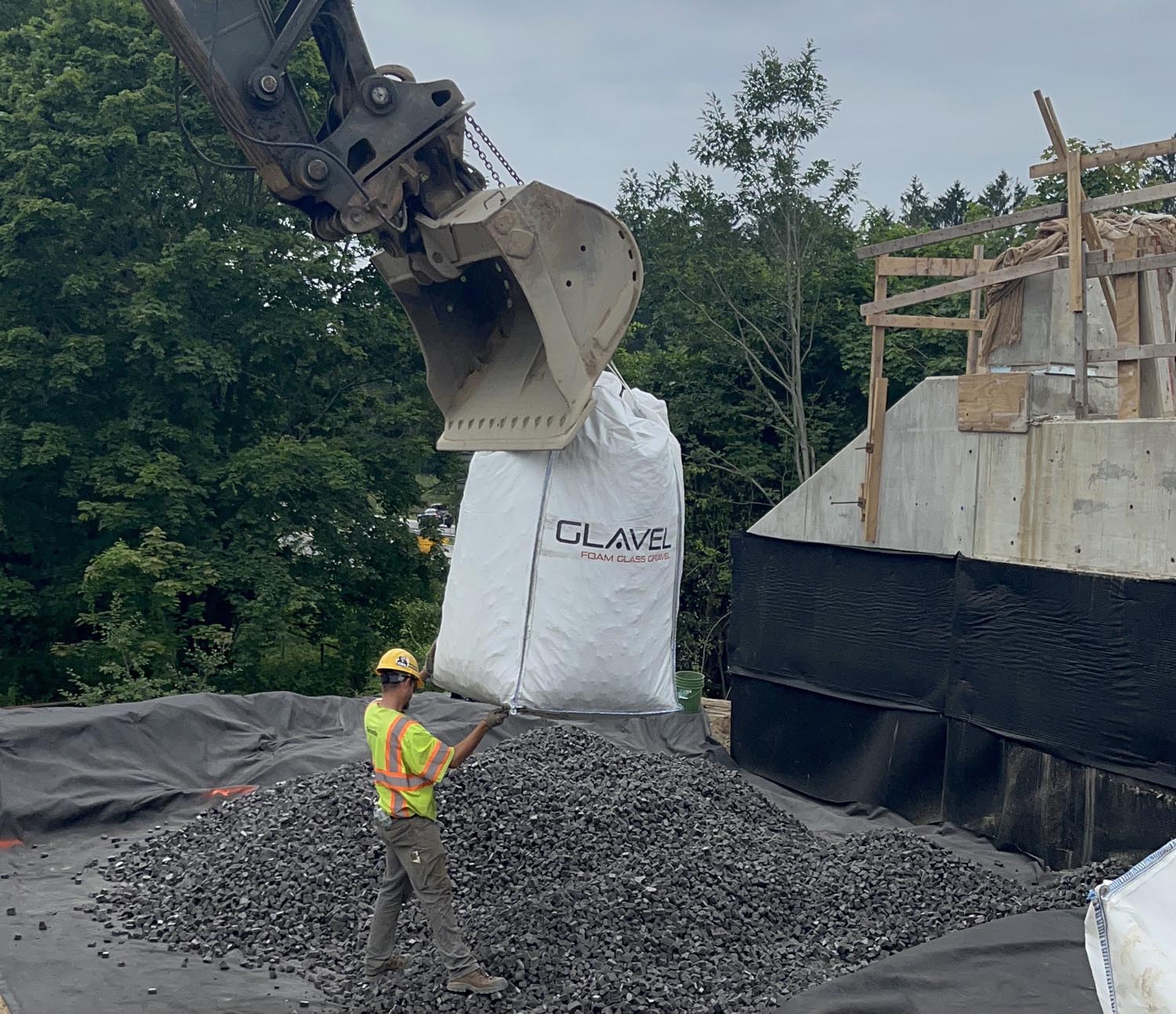
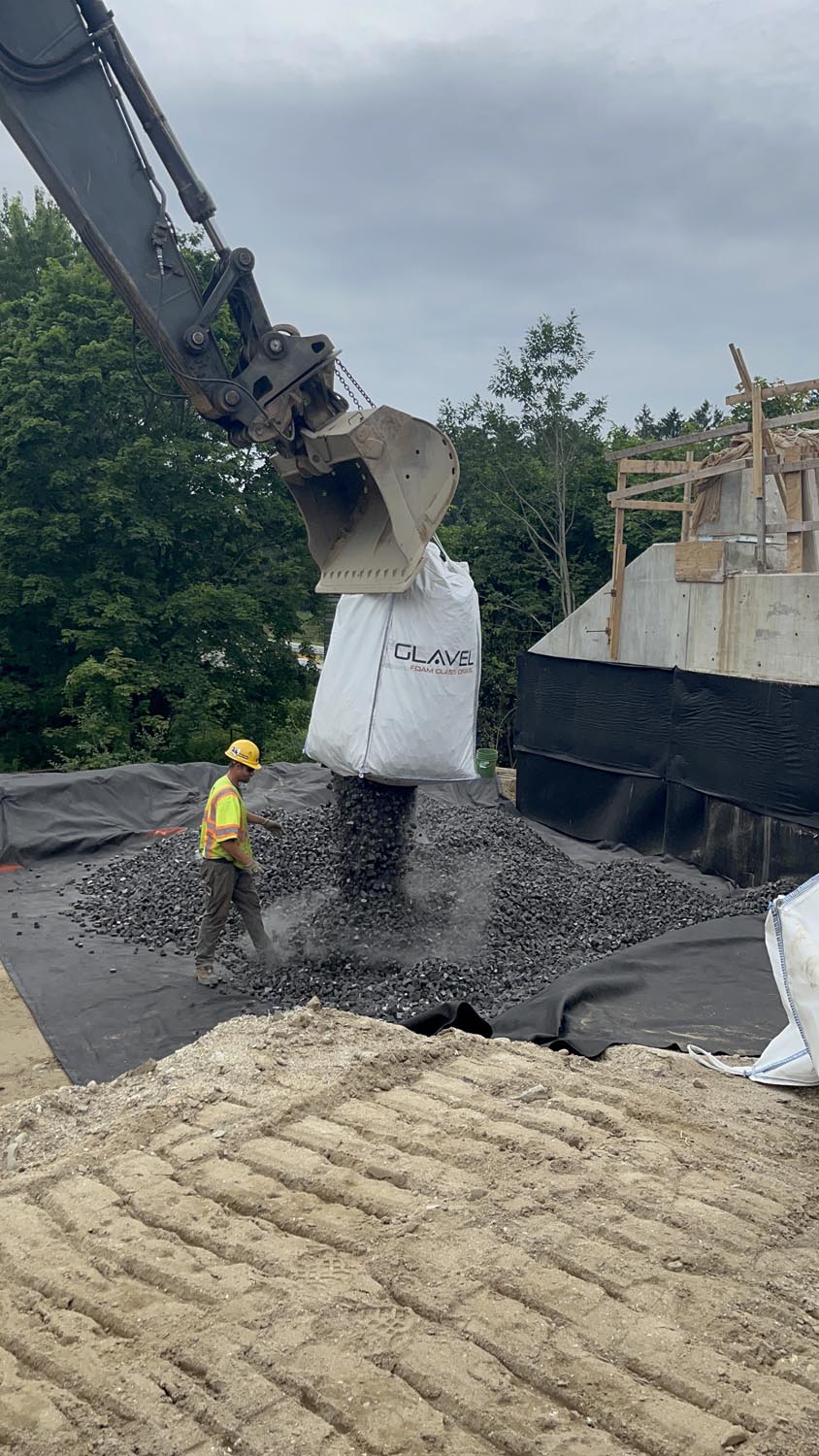
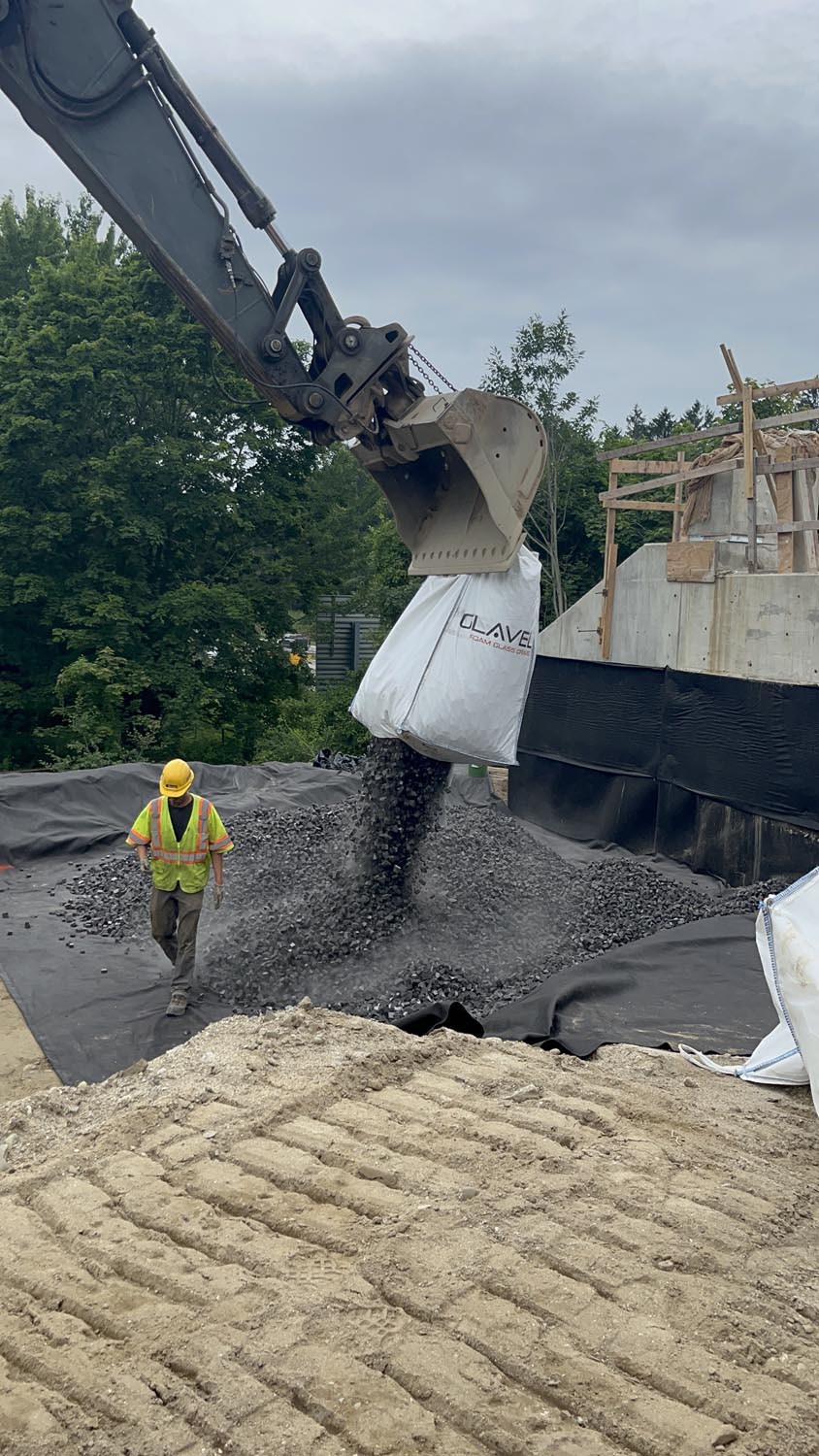
Foamed glass aggregate offered the combination of structural support and low unit weight needed for the installation. MaineDOT’s engineers specified foamed glass aggregate because of its low-bulk density and compressive strength that provided the structural capacity to support the bridge’s structure and traffic loads. The team at R.J. Grondin placed and compacted 6 feet of foamed glass aggregate to raise the grade and create stable bridge abutments.
Vermont’s Exit 17 Bridge replacement used 12,500 cubic yards of foamed glass aggregate to build bridge approaches over deep clay soils, eliminating the need for costly excavation while preventing long-term settlement in the I-89 corridor.
Commercial Construction
, Subslab Insulation
OnLogic
OnLogic’s 150,000 sq ft headquarters achieved 87% embodied carbon reduction by replacing traditional foam insulation with foamed glass aggregate in their subslab assembly.
Infrastructure Construction
, Lightweight Fill
Route 28 Bridge Replacement
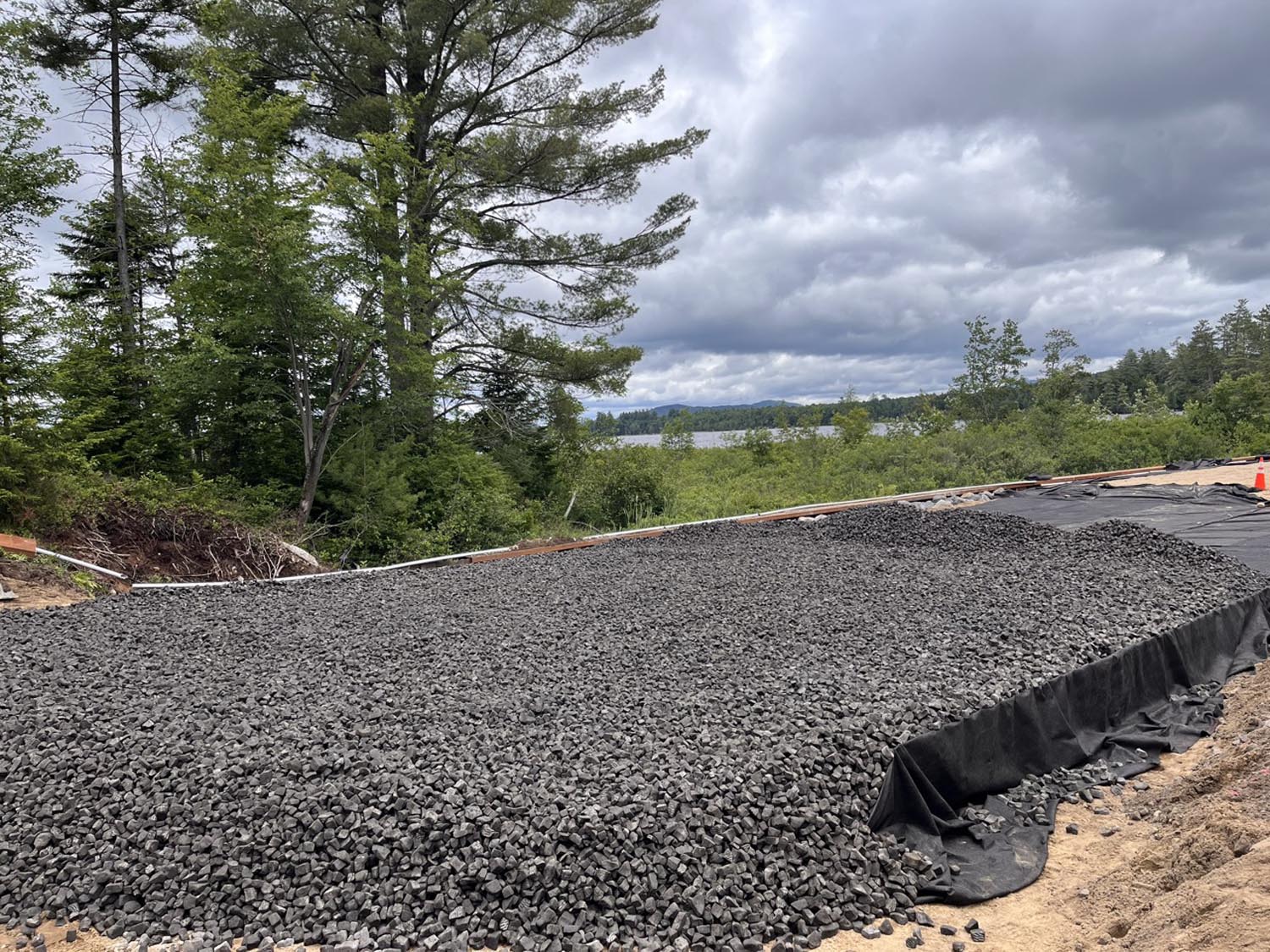
A historic bridge through the Adirondack Park near Raquette Lake needed a 12 foot grade change over a sensitive marshland. Foamed glass aggregate delivered a lightweight solution that protected the nearby landscape and eliminated the need for driving piles.
Commercial Construction
OnLogic
OnLogic’s 150,000 sq ft headquarters achieved 87% embodied carbon reduction by replacing traditional foam insulation with foamed glass aggregate in their subslab assembly.